Preparing for the Impact of AI
The following is the first in a series of contributions co-authored by Christian Adib of Fulkerson Advisors, and Greg Gilbert of Orchestration Services Limited.

Alvin Toffler, a prominent American writer, is credited with saying: “The illiterate of the 21st century will not be those who cannot read and write, but those who cannot learn, unlearn, and relearn.” While Artificial intelligence (AI) has been powering some of our most common technology experiences for a while now, in the last 12 months it has made a dramatic entry in terms of direct interaction. As technologists that focus on practical applications of emerging technology, two things stand out that we’d like to share. First, the recent development of AI is a great story worth understanding, and second, its impact will be profound and best leveraged by those who become informed adopters and practitioners.
The longer history of AI has its definition in research in the 1950’s which led to advances in machine learning that have been with us for some time, powering everything from the way your oven figures out how to maintain 325F degrees to calculating the best route to get home through traffic tomorrow at 5pm. We’ll pick up the story with a focus on large language models (LLM’s) about five years ago. These models are the basis of AI Chat offerings from OpenAI, Meta, Google, Anthropic, and others.

A major breakthrough was a 2017 paper published by researchers at Google Research and Google Brain entitled "Attention Is All You Need". Prior to this, models called neural networks ingested text, and trained themselves on processed natural language by measuring and refining their ability to predict the next word in a sentence. These AI language models were limited in their ability to interpret words in context. For example, the word "bank" has different meanings in the phrases "bank deposit" versus "river bank." Humans intuitively know from context what is meant, but AI struggled with this ambiguity.
The "Attention Is All You Need" paper proposed transformer model architectures that equipped AI to predict the next word based on information relevant to the context. Questions about business, finance and money were likely referring to “bank deposits”, while those that mentioned fish probably were referring to “river banks”.
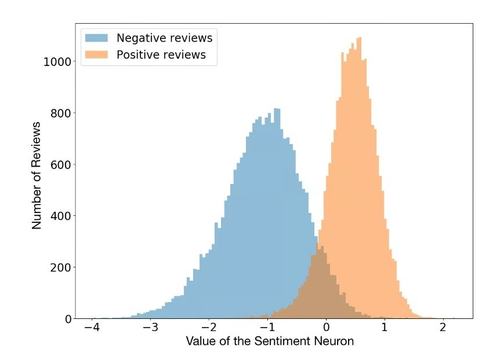
A surprising bi-product of this capability is that these new models proved to be good at larger language constructs, such as classifying sentiment. OpenAI’s GPT-2, trained on 82 million Amazon product reviews, was a very good predictor of sentiment. (See the story and associated paper on OpenAi’s website, Unsupervised Sentiment Neuron).
In conjunction with this “attention” approach, researchers found that the mathematical processing which previously had to be done in sequence could be broken out, performed in parallel, and then re-constructed. Additionally, the math could be done using a realm of math called linear algebra, and the parallel execution of huge numbers of fairly simple mathematical calculations.
For the chip maker Nvidia, this was a game changer. Nvidia could re-task chip expertise, architecture, and math domain expertise from Graphics Processing Units (GPU’s), where Nvidia had been optimizing graphics speed for gaming enthusiasts and others. When asked whether Nvidia’s fortunes are the result of luck or prescience, Jensen Huang, Nvidia’s CEO responded: “It wasn’t foresight. The foresight was accelerated computing.”* GPU performance has been doubling every couple of years per Moore's Law, allowing models to train faster on ever-growing datasets. NVIDIA's new H100 GPU, for instance, can perform up to 32 trillion floating point operations per second. This exponential growth in computing power has been essential for AI's swift advancement.

For the consumer, these advances mean that very powerful LLM’s can now respond in real-time. The core part of these models that takes in text inputs, processes them, and creates outputs, (the inference engine) went from a slow, stuttering service two years ago to the real-time engines they are now. These LLM’s also power “assistant” capabilities such as Google’s Duet AI and Microsoft Copilot.
However, these engines are nowhere near perfect. The industry has developed standards for the accuracy of responses in various subject areas and the current generation of LLM’s compares unfavorably with smart middle schoolers, scoring about a 90%, on middle school level math/word problems. In general comprehension across a variety of topics focused on retrieving the appropriate information, the base LLM’s also score about 90%. The misses in this area are famously referred to as “hallucinations”, and this rate of “hallucination” is unacceptable for unsupervised responses. We think of it this way: LLM’s are impressive at content summarization and derivative activities like capturing brand mentions or sentiment in a conversation, but are not yet the always correct factual engines we’ve become accustomed to with automated computer responses.
Finally, many people have concerns about the impact of adoption of AI capabilities. While we believe that the risks to humanity and “civilisation destruction” are overstated, there are real concerns, including job displacement, the impact of deep fakes, privacy and copyright violations, and unhealthy bias caused by bad data as well as other concerns. We’ve found the Stanford University One Hundred Year Study on Artificial Intelligence (AI100) to be a great source of reasoning on all aspects of AI, and particularly section SQ10. What are the most pressing dangers of AI?
AI is certainly changing the nature of work and personal activities. Properly harnessed, it promises to provide the next generation of tools, and to refocus human capabilities to a higher level of contribution. Understanding AI may be intimidating. However, we believe that AI is easier to understand than some people might think. We also feel strongly that the key to succeeding in the AI realm is to actively invest to better understand capabilities and opportunities to better leverage AI. In our next installment, we’ll provide a perspective on practical steps that individuals and companies can take to thrive in this new era